Mycotoxicosis and Ochratoxin A - published guidance, explained without the sales pitch.
Introduction: The Emerging Crisis of Water-Damaged Buildings (WDB)
Water-damaged buildings (WDB) constitute a multifaceted environmental health threat that necessitates a shift from viewing moisture as a mere structural defect to recognizing it as a catalyst for systemic pathology. The strategic importance of understanding WDB lies in the complex interaction between water intrusion events—ranging from overbank flooding and rapid flash floods to localized drainage failures—and the immediate proliferation of pathogenic biological agents within the built environment. This report establishes the clinical link between these events and the resulting physiological injury, providing a medical-grade analysis of the damage caused by dampness and microbial colonization. By moving beyond localized irritation, we can evaluate the long-term health hazards posed by these dynamic incubators of disease. This analysis begins with a characterization of the diverse biological constituents that populate the WDB ecosystem. If you have been weighing up black mold removal for a home around Salt Lake City, UT, this guide covers how it actually works, what it tends to cost, and where the results usually fall short.
Characterizing the Toxic Load: Biological and Bacterial Agents
Clinically accurate assessments of WDB must adopt a multi-pathogen framework, as these environments host a synergistic load of contaminants that overwhelm human compensatory mechanisms.| Agent Category | Primary Source | Pathogenic Potential || ------ | ------ | ------ || Mold Spores & Mildew | Saturated gypsum, wood, and damp plywood | Chronic respiratory inflammation and mycotoxin production. || Bacteria (Gram +/-) | Overloaded sewers, stagnant pools, and raw sewage | Sources of e-coli, hepatitis, and infectious disease agents. || Bacterial Endotoxins | Contaminated floodwaters and agricultural runoff | Potent triggers for systemic inflammatory responses. || Chemical Pollutants | Upstream runoff (oil, industrial/farm chemicals) | Chemical toxicity and secondary material contamination. || Ductwork Sediment | Inundated forced-air heating/cooling systems | Deep pulmonary deposition of circulated pathogens. |
The introduction of bacterial agents is frequently driven by Category 3 "black water," which carries raw sewage and agricultural waste into the structure. Gram-negative bacteria, such as E. coli, and various viral agents like hepatitis thrive in these conditions. Furthermore, the soaking of building materials—specifically wood, plywood, and gypsum wallboard—is critical for sustained growth. When these materials are saturated, they change in composition, swelling and warping while absorbing moisture and pollutants. This creates a long-term reservoir for microbial off-gassing and endotoxin release, transforming the building into a persistent source of internal physiological stress.
Physiological Mechanisms: Inflammatory and Oxidative Stress Pathways
Understanding the "Mechanism of Injury" at the cellular level is vital for identifying how WDB exposure transitions from an environmental irritant to a chronic health condition. Exposure to these biological agents activates three primary clinical pathways:
Systemic Inflammatory Response: Mold spores and particulate fragments act as persistent antigens, triggering a chronic state of immune activation that can extend far beyond the initial site of respiratory contact.
Oxidative Stress Activation: Fungal metabolites and microbial toxins initiate biochemical processes that deplete cellular antioxidants, leaving the body’s tissues vulnerable to sustained injury.
Endotoxin Priming: The presence of bacterial endotoxins from contaminated sewage or stagnant water has a synergistic effect on the immune system. These agents "prime" the body’s reactivity, significantly heightening the inflammatory response to fungal spores and secondary metabolites. The "So What?" layer of this mechanism is clear: the degradation of materials like plywood and gypsum ensures a constant pump of toxins into the occupant's environment. This leads to permanent cellular injury and multi-organ dysfunction rather than transient irritation, explaining why symptoms often persist long after the initial water event has concluded.
The Pathology of Mycotoxicosis
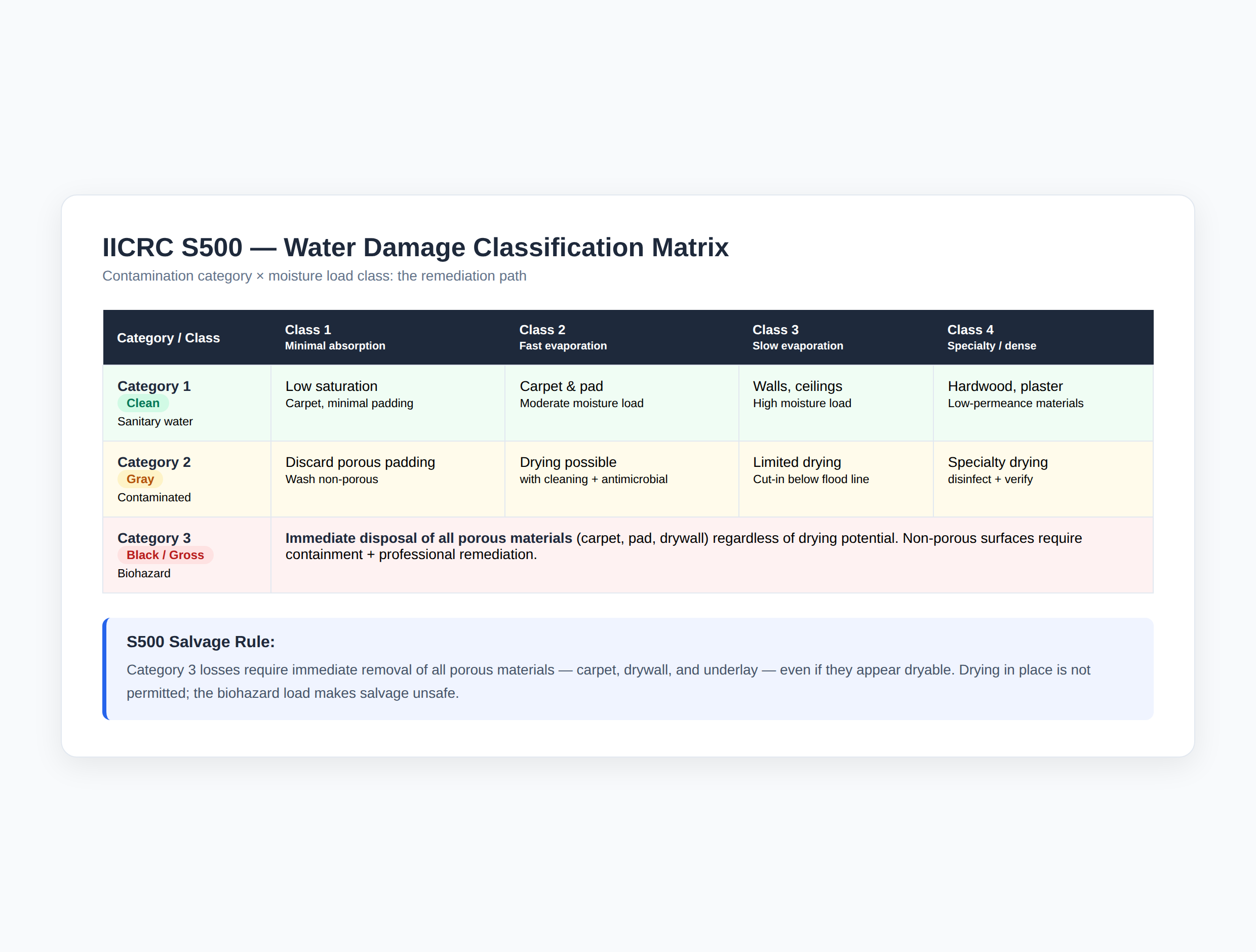
Mycotoxicosis is a distinct medical condition resulting from the ingestion, inhalation, or dermal absorption of toxic fungal metabolites. These mycotoxins are secondary metabolites that function as specific clinical toxins, targeting neurological, respiratory, and immune systems depending on the species present. The risk of severe pathology is determined by the "Category of Water" framework:
- Category 1: Clean water from a broken pipe or similar source; low immediate risk.
- Category 2: "Gray water" containing some contamination (e.g., dishwasher or washing machine overflow).
- Category 3: "Black water," which includes sewage backups, surface water from overbank flooding, and agricultural runoff. Category 3 water significantly increases the risk of severe mycotoxicosis because it provides the nutrient base and microbial seeding required for the most toxigenic species to flourish. This cellular pathology rapidly translates into observable, systemic clinical symptoms.
Clinical Symptomatology and Systemic Manifestations
Strategic differential diagnosis is required for patients exposed to WDB, as the multi-systemic manifestations often mimic other chronic illnesses.
- Neurological System: Manifestations include cognitive deficits—frequently described as "brain fog"—and memory issues, which reflect cellular injury within the central nervous system.
- Respiratory System: The progression of asthma and chronic airway inflammation is common, especially following the inhalation of dried sediments.
- Immune/Systemic: Over time, the systemic inflammatory load and oxidative stress lead to the development of multiple chemical sensitivities and chronic fatigue. Children and the elderly are at a significantly higher risk due to the presence of sediments in forced-air ductwork. When these systems are activated after inundation, dried biological agents and pollutants are circulated throughout the building, leading to deep pulmonary deposition in vulnerable populations whose respiratory defenses may already be compromised. Moving from diagnosis to intervention requires a merger of medical caution and structural remediation.
Conclusion: The Critical Intersection of Health and Habitat
Water-damaged buildings constitute a significant public health threat due to the synergistic effects of bacteria, mold, and sewage-borne pathogens. The path from a flood event to systemic illness is a defined progression of biological proliferation and cellular injury. Effective management of this crisis requires professional documentation, including moisture mapping and adherence to IICRC S500 standards, to validate both insurance claims and the medical necessity for aggressive environmental intervention. Protecting the intersection of health and habitat is paramount to preventing long-term pathology in flood-affected populations.
Relative Humidity and Mold Risk: The Numbers That Matter
Mold growth follows relative humidity. A normal baseline of 30-50% RH keeps spores dormant; keeping interior humidity below 50% is the recognized dust-mite and mold control zone. The risk curve steepens dramatically once humidity crosses 60% — the accelerated mold growth boundary — and at 70%+ RH, fungal colonization proceeds rapidly and continuously.

This is why professional drying targets a specific vapor-pressure differential rather than a vague "it feels dry" check — dehumidifiers must pull the indoor environment below the 60% boundary and hold it there through the full drying cycle. A cheap hygrometer in the affected room is the homeowner's first line of defense after any water event.
Health Canada's Mold Project Classifications: Size Determines Protocol
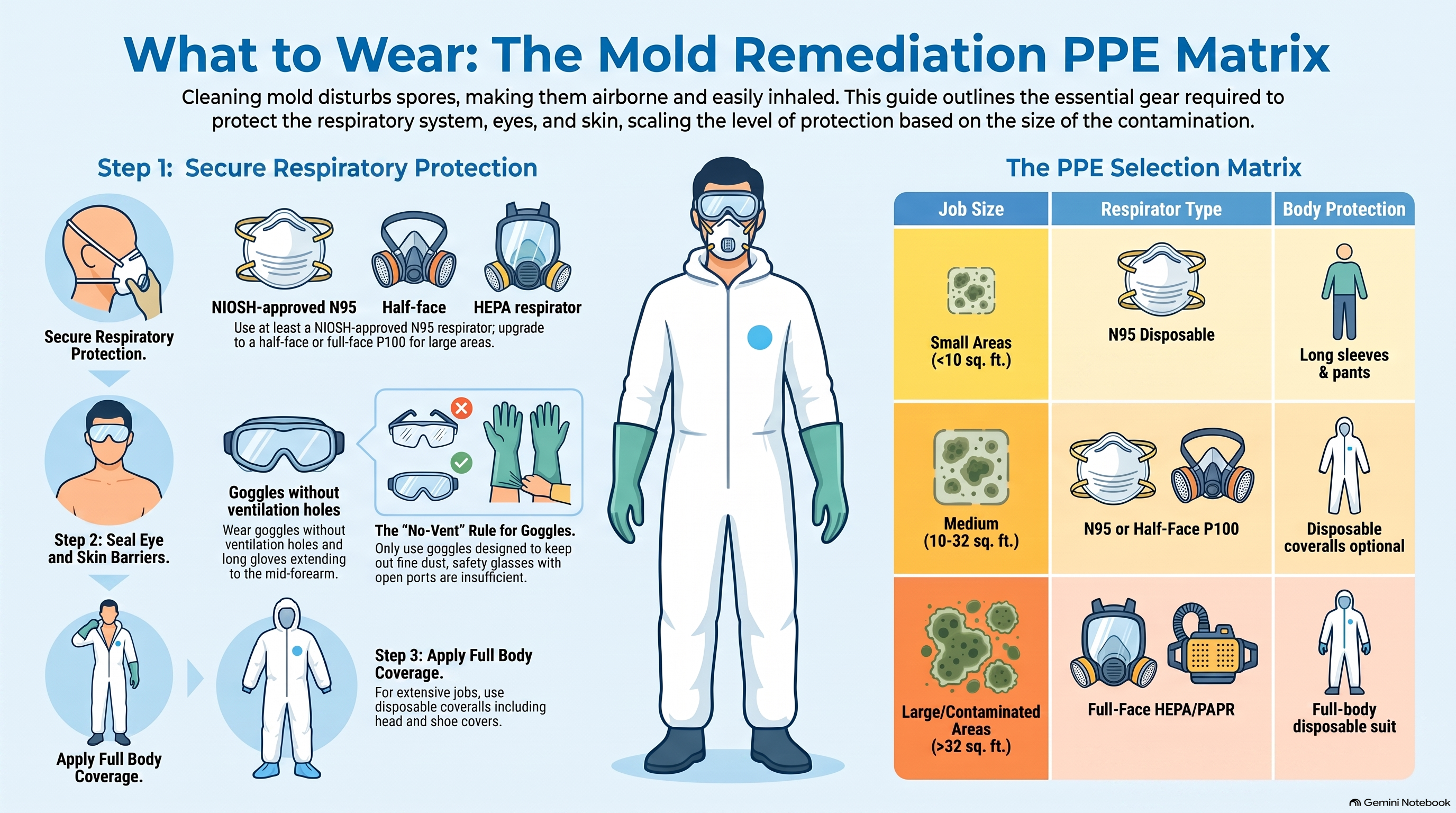
Not all mold jobs are equal, and Health Canada classifies them by physical footprint — which drives the containment and respirator requirements. Small projects (1-3 patches, each under about 10 square feet) can be handled with local containment and an N95 minimum. Medium projects (more than 3 patches, or contiguous growth between 10 and 32 square feet) require isolation barriers and a half-face respirator upgrade. Extensive projects — contiguous growth beyond 32 square feet — mandate a full system shutdown and P100 PAPR respirators for every worker.

The practical takeaway: if visible mold spans more than a couple of patches or a single area larger than a standard doorway, the job has crossed into professional territory — and any contractor who shows up in a dust mask for an extensive project is not following the standard.
Systemic Mycology: How Mold Actually Grows
Understanding mold starts with its two fundamental forms. Yeasts are unicellular fungi that reproduce locally by budding, forming moist mucoid colonies — the actively dividing form of the fungus. Filamentous molds are multicellular, growing via apical extension at hyphal tips and reproducing through hydrophobic airborne spores (conidia) that form the fuzzy networks we recognize on damp surfaces. Some species are dimorphic: they exist as spore-producing molds in the environment at cooler temperatures and revert to a parasitic yeast form inside the human body at 37°C, a strategy that helps them evade immune defenses.
The clinical impact spans a spectrum. At one end are allergic and chronic conditions like ABPA and CPA — gradual respiratory decline affecting asthmatics and cystic fibrosis patients. In the middle, structural colonization forms aspergillomas, localized fungal balls in the lungs. At the severe end, invasive aspergillosis disseminates through the bloodstream to the brain, heart, and kidneys, carrying up to 85% mortality in immunocompromised hosts. This spectrum is why the same visible mold in a home means very different things to a healthy adult and someone with a compromised immune system.